



1000 Square Design Electrolyzers
Your Leading SANY Hydrogen Energy Co., Ltd. Supplier
Focusing on the R&D, manufacturing and sales of hydrogen producing and refueling equipment and key components for a closed-loop full ecological industrial chain featured by green power, hydrogen energy and end-use equipment, SANY Hydrogen Energy Co., Ltd. is the world's leading provider of package solutions for hydrogen energy equipment, which is committed to providing global customers with GW-level ultra-large-scale package solutions on-grid/off-grid hydrogen production from wind and solar energy.
Why Choose Us?
High quality
Our products are manufactured or executed to very high standards, using the finest materials and manufacturing processes.
Competitive Price
We offering a higher-quality product or service at an equivalent price. As a result we have a growing and loyal customer base.
Global shipping
Our products support global shipping and the logistics system is complete, so our customers are all over the world.
Rich experience
Our company has many years of production work experience. The concept of customer-oriented and win-win cooperation makes the company more mature and stronger.
After-sale service
Professional and thoughtful after -sales team, let you worry about us after -sales Intimate service, strong after -sales team support.
Advanced equipment
A machine, tool or instrument designed with advanced technology and functionality to perform highly specific tasks with greater precision, efficiency and reliability.
Related Product

1200 Alkaline Water Electrolysis Hydrogen Production Equipment
New flow-field design with simulation testing features for flow uniformity in fuel cells
New-generation electrodes with industry-leading resistance overpotentials
Comprehensive power consumption ≤4.9 kWh/Nm³.

500 Alkaline Water Electrolysis Hydrogen Production Equipment
New flow-field design with simulation testing features for flow uniformity in fuel cells
New-generation electrodes with industry-leading resistance overpotentials
Comprehensive power consumption ≤4.9 kWh/Nm³.

1000 Alkaline Water Electrolysis Hydrogen Production Equipment
New flow-field design with simulation testing features for flow uniformity in fuel cells
New-generation electrodes with industry-leading resistance overpotentials
Comprehensive power consumption ≤4.9 kWh/Nm³.

1500 Alkaline Water Electrolysis Hydrogen Production Equipment
Double security with internal and external sealing
Upgraded fastening system reducing the leakage of electrolyzer under alternating working conditions.

Multi-in-one Alkaline Electrolyzer Hydrogen Producing Equipment
As the star product of SANY Hydrogen Energy, the all-in-one AWE hydrogen production equipment consists of four 1,000 Nm3/h electrolyzers and one 4,000 Nm3/h separation and purification system, providing users with an unprecedentedly efficient hydrogen production experience.

3000 Square Design Electrolyzers
This Square AWE equipment has a huge hydrogen production capacity of up to 3000 Nm³/h, which can provide powerful support for application scenarios with high demand for hydrogen energy and reliable guarantee for large-scale applications in the hydrogen energy industry.

Square Design Alkaline Water Electrolyzers
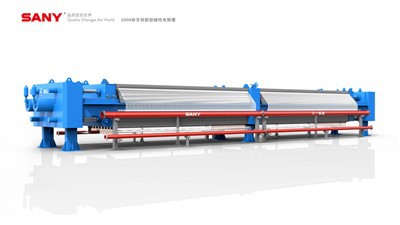
The hydrogen production capacity of this square AWE equipment is up to 1000Nm3/h per cell. The huge production capacity not only meets the high demand for hydrogen energy of some application scenarios, but also promotes the development of large-scale hydrogen energy industry.

Square Design Alkaline Hydrogen Electrolyzers
This Square AWE equipment has a huge hydrogen production capacity of up to 3000 Nm³/h, which can provide powerful support for application scenarios with high demand for hydrogen energy and reliable guarantee for large-scale applications in the hydrogen energy industry.
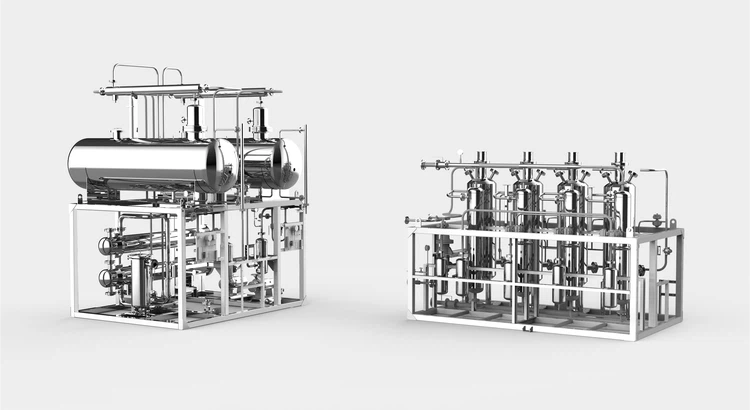
Rounnd Design Alkaline Electrolyzer
This Square AWE equipment has a huge hydrogen production capacity of up to 3000 Nm³/h, which can provide powerful support for application scenarios with high demand for hydrogen energy and reliable guarantee for large-scale applications in the hydrogen energy industry.
What is 1000 Square Design Electrolyzers?
Electrolysers, which use electricity to split water into hydrogen and oxygen, are a critical technology for producing low-emission hydrogen from renewable or nuclear electricity. Electrolysis capacity for dedicated hydrogen production has been growing in the past few years.
Benefits of 1000 Square Design Electrolyzers
Electrolyzers that use renewables to power their hydrogen production – like wind, solar, hydroelectric power, or certain biofuels – churn out emissions-free production of green hydrogen.
Down the value chain, green hydrogen will prove increasingly crucial for the production of green ammonia and methanol, chemical compounds crucial for the future of more sustainable agricultural practices, chemical production, and seaborne shipping.
Beyond output value, electrolyzers can also be used for longer-term energy storage, producing hydrogen that is stored in pressurized vessels for later use, with "much higher storage capacity compared to batteries (small scale)," according to the alternative energy advocacy organization American Clean Power.
Types of 1000 Square Design Electrolyzers
Proton exchange membrane (PEM) electrolyzers
PEM electrolyzers contain a proton exchange membrane that uses a solid polymer electrolyte. When an electrical current is applied to its cell stack during water electrolysis, the water splits into hydrogen and oxygen. The hydrogen protons pass through the membrane to form H2 on the cathode side.
Alkaline electrolyzers
Alkaline electrolyzers contain water and a liquid electrolyte solution such as potassium hydroxide (KOH) or sodium hydroxide (NaOH). When current is applied to an alkaline cell tack, the hydroxide ions (OH-) move through the electrolyte solutions from the cathode to the anode of each cell. The hydrogen gas bubbles are generated at the cathode, and the oxygen gas is generated at the anode.
Solid oxide electrolyzers
Solid oxide electrolyzers, or solid oxide electrolysis cells (SOECs), are solid oxide fuel cells that run in regenerative mode. A SOEC uses a solid oxide, or ceramic, electrolyte. When current is applied, and water is fed into its cathode, the water converts into hydrogen gas and oxide ions. While the hydrogen gas is captured for purification, the oxide ions move to the anode and release electrons to an external circuit to become oxygen gas.
Application of 1000 Square Design Electrolyzers
Transportation
Green hydrogen can be used in fuel cell vehicles, providing a zero-emission alternative to traditional internal combustion engines. Green ammonia and e-methanol, which are derivatives of green hydrogen, are currently being explored as key solutions in decarbonizing the world's industrial-scale transportation industries. This is particularly relevant in the global shipping industry, where there are projects set to be tested and developed as early as 2024.
Industry
Steel, cement and chemical production are among the industries with the highest level of emissions and, unfortunately, have the most difficulty in decarbonizing. This is partly due to the fact that many of the manufacturing processes across these industries require a large amount of energy to produce the high temperature heat needed for production. Luckily, these energy intensive processes can use green hydrogen as a substitute, opening up the possibility to produce products such as 'green steel' - where green hydrogen is used to generate heat and takes the place of coal and natural gas in facilitating chemical processes.
Energy storage
Green chemicals can also serve as energy storage mediums, allowing excess renewable energy from wind and solar to be stored and later converted back to electricity when needed. This helps stabilize the grid and supports the integration of intermittent renewable sources.
Components of 1000 Square Design Electrolyzers
Electrodes: The electrodes are the critical components that facilitate the electrolysis reaction. They are typically made of materials like platinum, nickel, or stainless steel, and are coated with a catalyst material to enhance the reaction rate.
Electrolyte: The electrolyte is the liquid or solid material that carries the charge between the electrodes. It allows the ions to move freely between the electrodes during the reaction.
Power supply: An external power supply provides the electrical energy required for the electrolysis reaction. It typically delivers a DC voltage to the electrodes.
Separator: The separator is used to physically separate the two electrodes and to prevent the gases produced during the reaction from mixing.
Gas collection system: The gas collection system is used to collect and separate the hydrogen and oxygen gases produced during the electrolysis reaction.
Cooling system: The cooling system helps to regulate the temperature of the electrolyzer during operation. Electrolysis can generate a significant amount of heat, which can reduce the efficiency of the reaction or even damage the electrodes.
Control system: The control system regulates and monitors the operating conditions of the electrolyzer, such as the voltage and current applied to the electrodes, the temperature of the electrolyte, and the gas pressure and flow rates.
Process of 1000 Square Design Electrolyzers
Alkaline electrolyzers are produced by immersing two electrodes - separated by a diaphragm - in an alkaline liquid electrolyte that conducts OH– anions. PEM electrolyzers are characterized because their electrolyte is a solid polymeric membrane that conducts H+.
Each of these routes has different advantages in terms of efficiency, flexibility, lifetime or purity of the final H2 produced. However, the manufacturing process for both types is very similar and can be divided into three main phases.
First, there is cell manufacturing. The cell, as with batteries, is the "core" of the electrolyzer; the means through which the electrochemical process that allows the production of H2 takes place.
These cells consist of two electrodes (cathode and anode) that require the addition of either a liquid electrolyte or a solid electrolyte membrane, depending on the supplier and the technology used. Other components are also necessary for proper operation, such as, for example, two porous layers that allow the transport of reagents and the elimination of products, or bipolar plates that provide mechanical support and distribute the flow.
Secondly, once the cells have been produced, the so-called stacks are developed. In these stacks, there are multiple cells connected in series, allowing them to be integrated with each other and thus achieving a device that consolidates the electrolysis capacity of the cells in a single element. To produce them, spacers (to isolate the opposing electrodes), gaskets, frames and plates (to achieve mechanical stability and prevent fluid leakage) are used.
Thirdly, we find the electrolyzer itself, where the integration of stacks with the rest of the equipment necessary for hydrogen production, such as cooling devices, hydrogen processing, water and electricity supply and gas outlet, is carried out.
Once these elements have been integrated into a single unit, the complete system will be available for electrolysis (either alkaline or PEM) and H2 production.
The main regular maintenance needed is draining and refilling electrolyte once a year or if the electrolyte quality is degraded. The used electrolyte needs to be disposed according to the local regulations. It should be checked that the ventilation ports are free of dust and obstacles and that there are no leakages.
In 1800, electrolysis was first identified. Following Alessandro Volta's development of the electric battery in the same year, several chemists experimented with joining their poles in a water container. They found that the current moved through the water and that the electrodes separated hydrogen from oxygen.
An electrode stack with a membrane separating them makes up an electrolyser, to which high voltage and current are supplied. As a result, the water develops an electric current that leads it to separate into its constituent parts, hydrogen, and oxygen. Pumps, power electronics, a gas separator, and other auxiliary parts like storage tanks are also included in the entire system.
The oxygen produced concurrently is released into the atmosphere or, in some situations, can be saved for later use as a medicinal or industrial gas. For usage in industry or hydrogen fuel cells, which can power vehicles like trains, ships, and even aircraft, the hydrogen is kept as a compressed gas or liquefied.
Managing Risks in Water Electrolyzers
Here are some key areas of risk analysis for water electrolyzers:
Electrical safety: Water electrolyzers use high voltage electricity to split water molecules into hydrogen and oxygen gas. This creates a risk of electric shock if the equipment is not designed, installed, and used properly. Safety measures such as grounding, insulation, and protective equipment should be in place to minimize this risk.
Explosive gas production: Hydrogen gas produced by water electrolyzers is highly flammable and can form explosive mixtures with air if it leaks or accumulates in an enclosed space. This risk can be mitigated by ensuring proper ventilation and safety measures such as gas detectors, flame arrestors, and explosion-proof equipment.
Chemical safety: Water electrolysis involves the use of strong acids or bases as electrolytes, which can be corrosive and hazardous if not handled properly. Safety measures such as protective clothing, eye protection, and proper storage and handling of chemicals should be in place.
Environmental impact: Water electrolysis can consume large amounts of electricity, which may come from non-renewable sources and contribute to greenhouse gas emissions. The disposal of waste products and chemicals from the process also needs to be managed carefully to avoid environmental harm.
Maintenance and operation: Proper maintenance and operation of water electrolyzers is critical to ensure their safe and efficient operation. This includes regular inspection and replacement of parts, monitoring of gas levels and flow, and following established safety procedures and protocols.
Our Factory
Focusing on the R&D, manufacturing and sales of hydrogen producing and refueling equipment and key components for a closed-loop full ecological industrial chain featured by green power, hydrogen energy and end-use equipment, SANY Hydrogen Energy Co., Ltd. is the world's leading provider of package solutions for hydrogen energy equipment, which is committed to providing global customers with GW-level ultra-large-scale package solutions on-grid/off-grid hydrogen production from wind and solar energy.


FAQ
Hot Tags: 1000 square design electrolyzers, China 1000 square design electrolyzers manufacturers, suppliers, factory, Hydraulic Driven Air Compressor, Hudraulic Driven Piston Air Compressor, 3000 Square Design Electrolyzers, Hydrogen Production and Refueling Demonstration Station, Hydrogenation Reactor, 500 Alkaline Water Electrolysis Hydrogen Production Equipment
You Might Also Like



Send Inquiry

