



Pem Electrolysis System
Your Leading SANY Hydrogen Energy Co., Ltd. Supplier
Focusing on the R&D, manufacturing and sales of hydrogen producing and refueling equipment and key components for a closed-loop full ecological industrial chain featured by green power, hydrogen energy and end-use equipment, SANY Hydrogen Energy Co., Ltd. is the world's leading provider of package solutions for hydrogen energy equipment, which is committed to providing global customers with GW-level ultra-large-scale package solutions on-grid/off-grid hydrogen production from wind and solar energy.
Why Choose Us?
High quality
Our products are manufactured or executed to very high standards, using the finest materials and manufacturing processes.
Competitive Price
We offering a higher-quality product or service at an equivalent price. As a result we have a growing and loyal customer base.
Global shipping
Our products support global shipping and the logistics system is complete, so our customers are all over the world.
Rich experience
Our company has many years of production work experience. The concept of customer-oriented and win-win cooperation makes the company more mature and stronger.
After-sale service
Professional and thoughtful after -sales team, let you worry about us after -sales Intimate service, strong after -sales team support.
Advanced equipment
A machine, tool or instrument designed with advanced technology and functionality to perform highly specific tasks with greater precision, efficiency and reliability.
Related Product

Small volume
High operating current density (1.5~3A/cm²)
Thickness of the core area of the tank less than 1m
Skid-mounted integrated auxiliary control system
High efficiency

Small volume
High operating current density (1.5~3A/cm²)
Thickness of the core area of the tank less than 1m
Skid-mounted integrated auxiliary control system
High efficiency
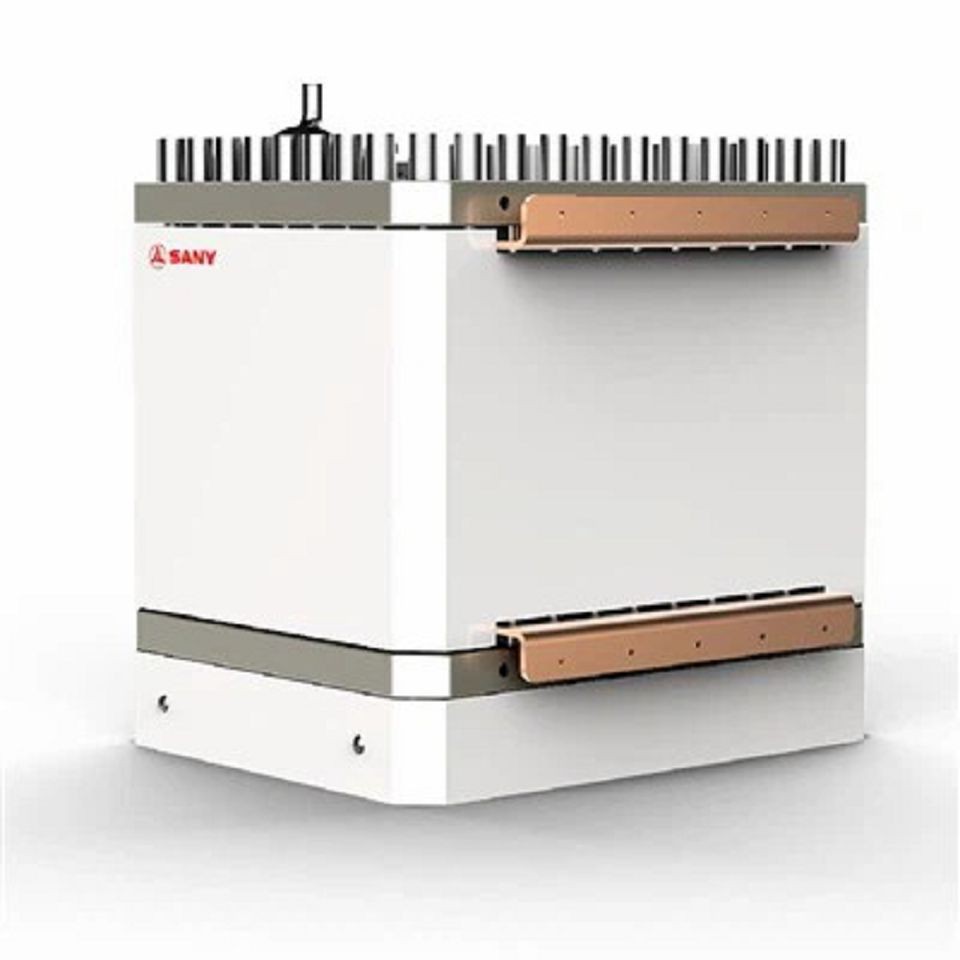
Proton Exchange Membrane Electrolyzer
Thermal efficiency higher than 75%
Preferred PEM membrane electrodes of international leading level
Strong expandability

Proton Exchange Membrane Pem Electrolysis
Compatible assembly program
Designed to meet the needs of different tank parameters
Skid-mounted platform integration

High efficiency
DC power consumption below 4.3 kWh/Nm³
Thermal efficiency higher than 75%

Pem Green Hydrogen Electrolyser
Less than 5 seconds for hot start, less than 300 seconds for cold start
Adaptable to load variations of 5-120%
Verified cyclic start/stop performance and life time

Thickness of the core area of the tank less than 1m
Skid-mounted integrated auxiliary control system
High efficiency

Less than 5 seconds for hot start, less than 300 seconds for cold start
Adaptable to load variations of 5-120%
Verified cyclic start/stop performance and life time

Self-developed dual-wire sealing design program
Multi-gas sensor monitoring and alarm interlock
Pressure, temperature parameters and hydrogen production circuit logic control
What is PEM Electrolysis System?
Proton exchange membrane (PEM) electrolysis is the electrolysis of water in a cell equipped with a solid polymer electrolyte (SPE) that is responsible for the conduction of protons, separation of product gases, and electrical insulation of the electrodes.
Benefits of PEM Electrolysis System
● It doesn't necessitate the use of electrolytes. This means that purified water can be employed, marking a significant benefit.
PEM electrolysis can operate over a range of current densities. Typically, the current density in PEM electrolysis systems can vary from as low as 0.2 A/cm² to as high as 2 A/cm² or more, depending on the specific design and operating conditions of the PEM electrolyzer. The capacity (current density) significantly influences the size of the electrolyzer and therefore PEM electrolysis generally offers a more compact footprint compared to pressurized alkaline water electrolysis, making it advantageous for applications where space efficiency is a key consideration.
● Another big benefit is also PEM's ability to swiftly adapt to variable power levels within seconds.
Maintaining an overpotential voltage degradation rate below 100 mV/year is a common target for PEM electrolysis systems. However, it's essential to recognize that the actual degradation rate can vary depending on operational factors and maintenance practices. The construction and quality of the electrolyzer, which are determined by the original manufacturer, play a crucial role in influencing degradation rates. Therefore, it's advisable to consult with your electrolyzer manufacturer for specific information on expected degradation rates and recommended maintenance procedures.
● PEM is a solid polymer electrolyte membrane. The two sides of the membrane can withstand a large pressure difference, and only have a unidirectional conduction effect on hydrogen ions. It can directly separate the reactant hydrogen and oxygen to avoid cross-gassing, and has good safety. , The product gas has high purity. For alkaline electrolysis, a liquid electrolytic cell is used, and the porous asbestos cloth becomes a diaphragm by impregnation. Therefore, a strict pressure difference control system must be installed to ensure that no air leakage occurs in the anode and cathode reaction chambers and avoid safety accidents.
● The PEM electrolyte membrane can be less than 200μm, the electrode spacing is small, it can reduce the working voltage and energy consumption, and make the structure of the electrolytic cell more compact.
● Water is both a reactant and a cooling medium, eliminating the need for a cooling system and reducing the volume and weight of the device. Because the PEM electrolytic cell uses pure water as the electrolyte, the corrosion of the electrolyte to the tank body is avoided, the reaction product does not contain alkali mist, and the gas purity is higher.
Types of PEM Electrolysis System
Polymer electrolyte membrane (PEM) electrolysis
PEM electrolysis using a polymer electrolyte membrane is the most common and efficient method of producing hydrogen gas. The benefits of PEM electrolysis include its high efficiency, fast response time, and low operating temperature.
Proton conducting ceramic electrolysis (PCCE)
Proton conducting ceramic electrolysis uses a proton-conducting ceramic membrane as the electrolyte. The benefits of PCCE include its high efficiency, high-temperature operation and long-term stability.
Alkaline electrolysis
Alkaline electrolysis uses an alkaline solution as the electrolyte. The benefits of alkaline electrolysis include its high efficiency, low cost, and the ability to operate at high current densities.
Solid oxide electrolysis
Solid oxide electrolysis uses a solid oxide material as the electrolyte. The benefits of solid oxide electrolysis include its high efficiency, high operating temperature, and the ability to operate at high current densities.
Components of PEM Electrolysis System
Compression plate
The compression plate is made of aluminum alloy, used for fixing the entire electrolysis cell.
Bipolar plates (BPP)
Bipolar plates (BPP) are flat separator plates (either with metal mesh or screen lamination or with etched flow field channels thick metal separators) used to match the power supply voltage by stacking multiple electrolysis cell units in series. Separate adjacent units and connect them electronically. It needs to have low low resistance and high mechanical and chemical stability, fluid distribution, and high thermal conductivity as it also helps to promote heat transfer.
Titanium is generally considered the most advanced material because it has excellent strength, low resistivity, high thermal conductivity and low hydrogen permeability. However, titanium is prone to corrosion, especially on the anode side, where potentials may exceed 2V leading to the accumulation of surface oxides, thereby increasing contact resistance and reducing thermal conductivity. To avoid this, a thin platinum coating can be applied to reduce surface resistance.
Gas diffusion layer (GDL)
The gas diffusion layer or called the current collector GDL or PTL, as an electronic conductor between the MEA and BPP, ensures efficient mass transfer of liquids and gases between the electrodes and the BPP.
At the anode, the liquid water transports from the passages of the BPP to the catalyst layer on the membrane through the current collector, where the water is decomposed into oxygen and protons. The oxygen generated here diffuses in the opposite direction through the current collector into the flow passages.
At the cathode, liquid water and hydrogen are transported from the membrane to the passages of the BPP through the current collector. Electrons start from the catalyst layer on the anode side, pass through the current collector and BPP, and then reach the cathode side. In PEM electrolyzers, the anode potential is high enough to oxidize carbon materials and other materials must be used. Titanium is often a choice for current collectors at the anode.
Membrane electrode assembly (MEA)
The MEA consists of a proton-conducting membrane coated with porous electrocatalyst layers on both the anode and cathode sides, which is the core component of the electrolyzer, where water is decomposed into gaseous hydrogen and oxygen by electric current. At the anode, water is oxidized into oxygen and protons. The hydrated protons then migrate to the cathode. Electrons flow to the cathode through the external circuit.
At the cathode, protons gain electrons and are reduced to form hydrogen gas. Iridium oxide is generally considered the most advanced catalyst in PEM water electrolysis. Among single transition oxides, RuO2 has the highest OER activity, but it is not stable under electrolyzer conditions. IrO2 has slightly lower activity than RuO2 but has the advantage of higher corrosion resistance.
PEM electrolysers contain a number of titanium components; this makes them highly vulnerable to oxidation and degradation due to the water intensity of the process. Adding a protective coating to the cell separators, bipolar plates and porous transport layers prevents corrosion, lowers the interfacial contact resistances and maintains this low resistance for 10,000's hours, increasing the efficiency and lifetime of the system.
As well as producing these component coatings, TFP Hydrogen also produces catalysts for catalyst-coated membranes (CCMs), including both anode catalysts (IrO2 and IrRuO2) and cathode catalysts (Pt/C). Formulated to enable the system to operate at a low voltage, improve long-term durability and ensure high performance over 10,000s hours; these catalysts are highly dispersible into inks and, in testing stages, came out top in performance and durability evaluations.
All of these benefits mean that the electrolyser system is able to operate at high energy efficiency over long time periods, which is necessary to make green hydrogen production more competitive and facilitate the drive towards making it a future mainstream energy source.
A PEM electrolyser cell stack has a number of components, these include a cathode, an anode and a selectively permeable proton exchange membrane, as well as cell separators or bipolar plates, and flow distributors such as porous transport layers (PTL's).
Depending on the application and energy source PEM electrolysers can be scaled up or down utilising multiple stacks to produce the energy output required.
Water is fed consistently into the electrolyser and is split by an electrical current into its component molecules hydrogen and oxygen. At the anode the water reacts to form oxygen, positively charged hydrogen ions (protons) and electrons. The electrons then flow around an external circuit and the hydrogen ions move across the selectively permeable membrane to the cathode where they recombine with the electrons to form hydrogen gas.
This gas can then be used straight away or stored as a liquid or gas for future use.
Alkaline electrolyzers may seem like the most affordable option - after all, alkaline has been around for decades longer than PEM. However, progressions in PEM technology have changed its cost.
An analysis of both types of electrolyzers shows that the stack cost of an alkaline electrolyzer is lower than PEM. But when it comes to the complexity and cost of balance of plant (BOP) as the system size increases, PEM is lower, according to the Fraunhofer Institute for Solar Energy Systems ISE. In fact, the total cost of ownership of a PEM electrolyzer is lower than alkaline with forecasters estimating that PEM service costs are one-third of alkaline.
When scaling an electrolyzer, PEM has significant cost advantages in balance of plant economics. On a per-kilowatt basis, the capital expenditure associated with an alkaline electrolyzer increases significantly as the system scales. With PEM, there are options for streamlining BOP to minimize upfront cost in larger systems above 10 megawatts.
When considering output pressure, standard alkaline electrolyzers deliver output at a low pressure of 1 to 10 bar, which is a nearly ambient pressure. For most applications, hydrogen must be further compressed for transport, storage, or consumption. On the flip side, PEM electrolyzers have an output of 40 bar - that's 4 to 40 times of a typical alkaline system.
Pressure is generated by the electrochemical process in the stack, meaning PEM avoids first stage compression to bring it up to 40 bar, and bypasses the energy costs associated with compressor operation.
Alkaline's caustic electrolyte solution can also ratchet up its hefty price tag. For example, a 10 to 20-year-project means a long term need to replace parts such as pumps and valves, or the removal of potassium hydroxide from the hydrogen or oxygen streams. The 3.5 ton per megawatt requirement for highly-corrosive potassium hydroxide in alkaline systems typically incur significant space requirements – often two to three times the space of PEM system for a similar output. Any losses in space can lead to losses in revenue.
What is the Temperature of PEM Electrolysis?
60–80 °C
Conventional low temperature PEM electrolyzers (LT-PEME) operate at temperatures in the range 60–80 °C, using Pt black or carbon supported Pt-based catalysts are used as electrocatalyst for the hydrogen evolution reaction (HER) at the cathode.
Our Factory
Focusing on the R&D, manufacturing and sales of hydrogen producing and refueling equipment and key components for a closed-loop full ecological industrial chain featured by green power, hydrogen energy and end-use equipment, SANY Hydrogen Energy Co., Ltd. is the world's leading provider of package solutions for hydrogen energy equipment, which is committed to providing global customers with GW-level ultra-large-scale package solutions on-grid/off-grid hydrogen production from wind and solar energy.


FAQ
Hot Tags: pem electrolysis system, China pem electrolysis system manufacturers, suppliers, factory, Rounnd Design Alkaline Electrolysis Hydrogen, Pem Water Electrolyser, Hydrogen Production and Refueling Integrated Station, Hydro Air Compressor, Square Design Alkaline Electrolysis System, 1000 Alkaline Water Electrolysis Hydrogen Production Equipment
Previous
200 Pem ElectrolyzerYou Might Also Like


Send Inquiry

