



Hydraulic Piston Compressor
Your Leading SANY Hydrogen Energy Co., Ltd. Supplier
Focusing on the R&D, manufacturing and sales of hydrogen producing and refueling equipment and key components for a closed-loop full ecological industrial chain featured by green power, hydrogen energy and end-use equipment, SANY Hydrogen Energy Co., Ltd. is the world's leading provider of package solutions for hydrogen energy equipment, which is committed to providing global customers with GW-level ultra-large-scale package solutions on-grid/off-grid hydrogen production from wind and solar energy.
Why Choose Us?
High quality
Our products are manufactured or executed to very high standards, using the finest materials and manufacturing processes.
Competitive Price
We offering a higher-quality product or service at an equivalent price. As a result we have a growing and loyal customer base.
Global shipping
Our products support global shipping and the logistics system is complete, so our customers are all over the world.
Rich experience
Our company has many years of production work experience. The concept of customer-oriented and win-win cooperation makes the company more mature and stronger.
After-sale service
Professional and thoughtful after -sales team, let you worry about us after -sales Intimate service, strong after -sales team support.
Advanced equipment
A machine, tool or instrument designed with advanced technology and functionality to perform highly specific tasks with greater precision, efficiency and reliability.
Related Product

To develop the customized equipment package for fixed/skid-mounted hydrogen refueling stations according to different needs of customers.

Electrolysis Water Hydrogen Production Device
Equipped with unloading, pressurization, storage and cooling units for remote dispensing, monitoring of key equipment status, cloud computing and big data analysis with higher efficiency and utilization rate.

Portable Hydraulic Spring Compresso
The exhaust pressure is up to 45 MPa, which allows it to stand out in high-pressure procedures such as hydrogen refueling, ensuring efficient and stable operation of the production process.

The capacity of the main motor is 110 kW, which provides powerful driving force for the equipment, ensuring efficient and stable operation and reducing the costs of energy consumption.

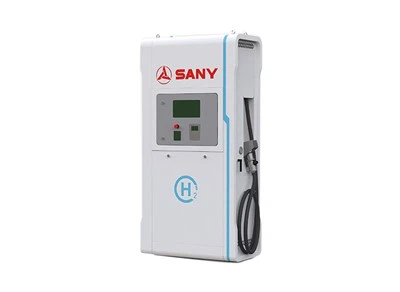
Fixed hydrogen refueling station: Equipped with unloading, pressurization, storage and cooling units for remote dispensing, monitoring of key equipment status, cloud computing and big data analysis with higher efficiency and utilization rate.

The noise of this equipment is controlled below 80 dB(A), which takes into account the high sensitivity of modern industrial environment to noise, ensuring a better operating environment for operators.

Hydraulic Motor Driven Air Compressor
The inlet pressure range is wide from 2 MPa to 20 MPa, which can be applied to different operating conditions, which allows it to operate flexibly.

Hudraulic Driven Piston Air Compressor
The outstanding performance of this compressor is represented by its large displacement of up to 1000 Nm3/h@12.5 MPa, which serves as sufficient power support for the hydrogen refueling process.

Compressors for the fixed/Skid-mounted hydrogen refueling station: Available for customization and assembly according to customers'needs, and compatible with diaphragm or liquid-driven compressors.
What is Hydraulic Piston Compressor?
A piston compressor is the oldest and most common type of industrial compressor. This type of air compressor uses principles of displacement to increase the pressure of the enclosed volume of gas or air. They are available in a range of configurations, from single-acting, double-acting, oil-lubricated or oil-free.
High-pressure capability
Piston compressors can deliver high-pressure air, making them ideal for applications requiring significant pressure, such as powering pneumatic equipment and machinery.
Durability and longevity
These compressors are intended to last, with sturdy construction that can handle severe use and tough conditions. They can have an extended operational life if properly maintained.
Cost-effective
Piston compressors are less expensive than other types of compressors. Their simple design and fewer moving components help to lower maintenance and repair expenses.
Wide range of sizes
Piston compressors are available in a range of sizes, from small portable devices to huge stationary systems, making them suitable for a wide range of applications.
Easy maintenance
Piston compressors are easy to maintain as they have fewer intricate components. This lowers downtime and allows the compressor to operate for extended periods.
Types of Hydraulic Piston Compressor
One-stage compressor
A one-stage compressor has one or more cylinders, each of which compresses air from atmospheric pressure to operational pressure.
Multi-stage compressor
A multi-stage compressor has two or more cylinders connected in series in which air is gradually compressed to the needed pressure level. Between steps, the compressed air is cooled with ambient air. This improves efficiency while achieving a much higher pressure level than the one-stage compressor.
High speed or separable reciprocating compressor
These compressors are called 'separable' because they are separate from their energy source. They are driven by engines or motors.
Low speed (integral) reciprocating compressors
These types of reciprocating compressors are called 'integral' because their driver is mounted into the frame of the compressor.
Application of Hydraulic Piston Compressor
Refrigeration cycle
The piston compressors assist in the refrigeration process due to their efficiency. It helps compress and propagate the compressed coolant through the system to maintain temperatures.
Oil refineries
Oil refries process viscous liquids such as crude oil through air-operated tools. The air operated-tools require a balanced air supply that piston compression systems can easily supply to the users.
Gas pipes
The piston compression pumps are also suitable for gas pipes, especially for natural gas processing systems. It helps blow consistent pressure into the system, which is why professionals utilize it in chemical plants too. For example, chemical plants may use it in complicated techniques such as the Haber-Bosh Process.
Bottom line
Investing in a piston compressor can make it easier for industrial units to get affordable and consistent performance. The piston compressor is a positive displacement pump, allowing superior air pressure production and storage. The piston compressors are especially good since they require less lower maintenance.
Components of Hydraulic Piston Compressor


Body
The compressor body includes the cylinder block and crankcase. Generally, it is made of high strength grey cast iron.
Cylinder
The cylinder is a key component of a piston compressor. According to different pressure, discharge capacity and gas properties of the compressor, users should select cylinders made of different materials and with appropriate structures.
Basic requirements for cylinders are: strength and stiffness, good cooling, lubrication and wear resistance.
Crankshaft
By changing the rotary motion of the motor into reciprocating linear motion of the piston through the connecting rod, the crankshaft transmits the full power of the compressor. It is one of the key components of the motion system of the compressor.
Connecting rod
Connecting rod is the connecting piece between the crankshaft and piston, which transforms the rotary motion of the crankshaft into the reciprocating motion of the piston, and transfers power to the piston to work on gas.
The connecting rod comprises a connecting rod body, a small end bush, a big end bearing bush and a bolt.
Piston group
Piston group is the generic name of the piston, including piston pin and piston ring. Driven by the connecting rod, the piston group makes reciprocating linear motion in the cylinder, so as to form a variable working volume together with the cylinder, and therefore to complete the process of suction, compression and exhaust.
Piston
The piston can be divided into cylinder and disc. Piston material is generally aluminium alloy or cast iron.
Piston pin
The piston pin is used to connect the small end of the piston and the connecting rod. It bears a complex alternating load when working.
Piston ring
It is a circular ring with a cut on it, and the cut may be straight, inclined or overlap. The angle of the inclined cut is 45 degrees.
The piston ring is comprised of a gas ring and an oil ring. The gas ring works as a seal between the piston and the cylinder wall to prevent the compressed air from leaking from the gap between the piston and the cylinder wall. The oil ring is to distribute oil and scrape off the excess lubricating oil on the cylinder wall.
Shaft seal
A shaft seal is for preventing compressed gas from leaking out along the extended end of the crankshaft, and also for preventing outside air from leaking in when the pressure in the crankcase is lower than atmospheric pressure.
Crankcase heater
The crankcase heater ensures the normal lubrication of the refrigerant heater in the crankcase by separating the refrigerant in the crankcase.
Users should install a crankcase heater in any environment. When the compressor runs with the crankcase temperature 20 ℃ higher than the environment temperature, the crankshaft heater will be powered off. When the compressor stops, the heater will be powered on.
Compressor motor protection device
To prevent overload or overheating of the compressor, the motor is built-in with 6 PTC thermistors. Generally speaking, L, N is for power supply, 11, 14 are connected to the control circuit, and 12 is the alarm indicator.
Oil pressure safety device
The oil pressure safety device monitors the pressure difference between the inlet and outlet of the oil pump to ensure the lubrication of the compressor. It is usually less than 0.7 bar and has 90 ± 10 seconds' delay. The oil pressure difference of the compressor is 2.5 ~ 3 kg/cm.
The oil pressure difference of a single-stage compressor is calculated as:
P = Oil Pump Outlet Pressure - Suction Pressure.
The oil pressure difference of the two-stage compressor is calculated as:
P = Oil Pump Outlet Pressure - Intermediate Pressure.
How to Maintain Hydraulic Piston Compressor
Filter changes
One of the simplest procedures you should always remember is to change your filters regularly; this includes oil filters, air inlet and discharge filters, and an air/oil separator. If you check and replace them every 2000 hours of use, you will prevent the oil from becoming contaminated and damaging the mechanisms. For dirtier environments, they will need to be changed more regularly.
Lubricant checks
With so many moving parts in a piston compressor, you need to remember to check your lubricant level and how clean it is. Lubrication always needs to be at the optimum level and quality because it protects the moving parts from excess wear, keeps the compressor cool and removes contaminants. You should check it by regularly sampling and always follow your manufacturer's guidelines when it comes to replacing it.
Motor bearings
With the crankshaft being driven by a motor inside a piston compressor, you need to check and lubricate the bearings inside the motor on a regular basis. By lubricating it with motor grease, you will increase its lifespan by keeping the bearings cool and preventing them from breaking down. Always remember to use the correct type of motor grease, avoid mixing grease types, and do not over grease as this can cause further problems. When you check your motor bearings, make sure you replace them before they're worn out as this can hinder performance.
Drive belt inspections
Piston compressors are belt-driven models so it is important to check that all belts are properly adjusted and haven't slipped, and that there isn't any signs of excessive wear. By using a belt tension gauge, you can compare the reading to the one in the manual; if it is low, you should tighten the bolts and if it is high, you should loosen the bolts. You should stay on top of this because not only can it reduce the performance speed, but it can damage the belt in the long run.
Temperature control
The number of moving parts within a piston compressor means that you need to take into consideration the space that is around it to avoid overheating. They can reach up to 200°C when operating, so always make sure that you have enough clearance in order to allow the air to flow and cool it down. Overheating can severely damage the mechanisms within the compressed air system, so remember that they should only be used intermittently and they should be stored with lots of space around them.
How Piston Compressors Compress Air
The first recorded reference to a piston compressor (also known as a 'reciprocating compressor') was made towards the end of the 18th century. While the technology has improved dramatically since then, the basic concept behind the piston compressor remains the same:
When the piston in the piston compressor descends, it creates a vacuum, drawing air into the compressor via the inlet.
This air passes through inlet valves into the cylinder. While these inlet valves are currently open, the discharge valves are closed. In other words, air travels in, but is unable to get out.
When the cylinder is full of air, the piston ascends, compressing the air.
The discharge valves usually open at a certain level of pressure. As the piston ascends, it pushes the compressed air out through the open discharge valves.
Our Factory
Focusing on the R&D, manufacturing and sales of hydrogen producing and refueling equipment and key components for a closed-loop full ecological industrial chain featured by green power, hydrogen energy and end-use equipment, SANY Hydrogen Energy Co., Ltd. is the world's leading provider of package solutions for hydrogen energy equipment, which is committed to providing global customers with GW-level ultra-large-scale package solutions on-grid/off-grid hydrogen production from wind and solar energy.


FAQ
Hot Tags: hydraulic piston compressor, China hydraulic piston compressor manufacturers, suppliers, factory, Skid Mounted Air Compressor, Gas Compression Skid, Electrolysis Water Hydrogen Production Device, Proton Exchange Membrane Pem Electrolyzer, 1000 Alkaline Water Electrolysis Hydrogen Production Equipment, Pem Green Hydrogen Electrolyser
You Might Also Like


Send Inquiry

